Nonlinear optical response to probe quantum geometry
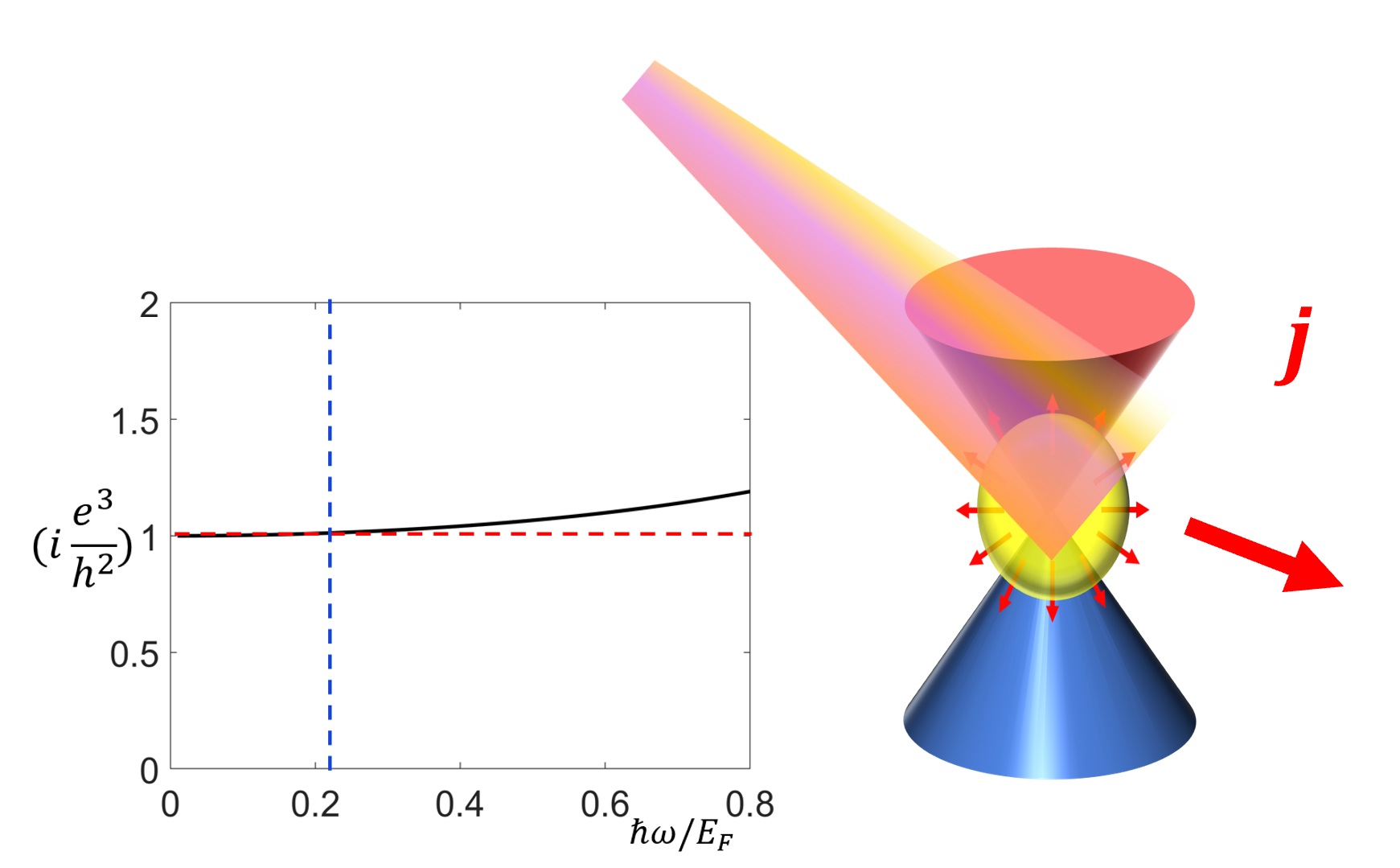
Light can generate electrical currents in materials upon illumination. Beyond application in solar energy harvesting, the photoelectric signals can serve as probes of geometric properties of electronic wavefunctions, deeply connected to quantum transport and interaction phenomena.
Light-driven lattice dynamics in ferroic materials
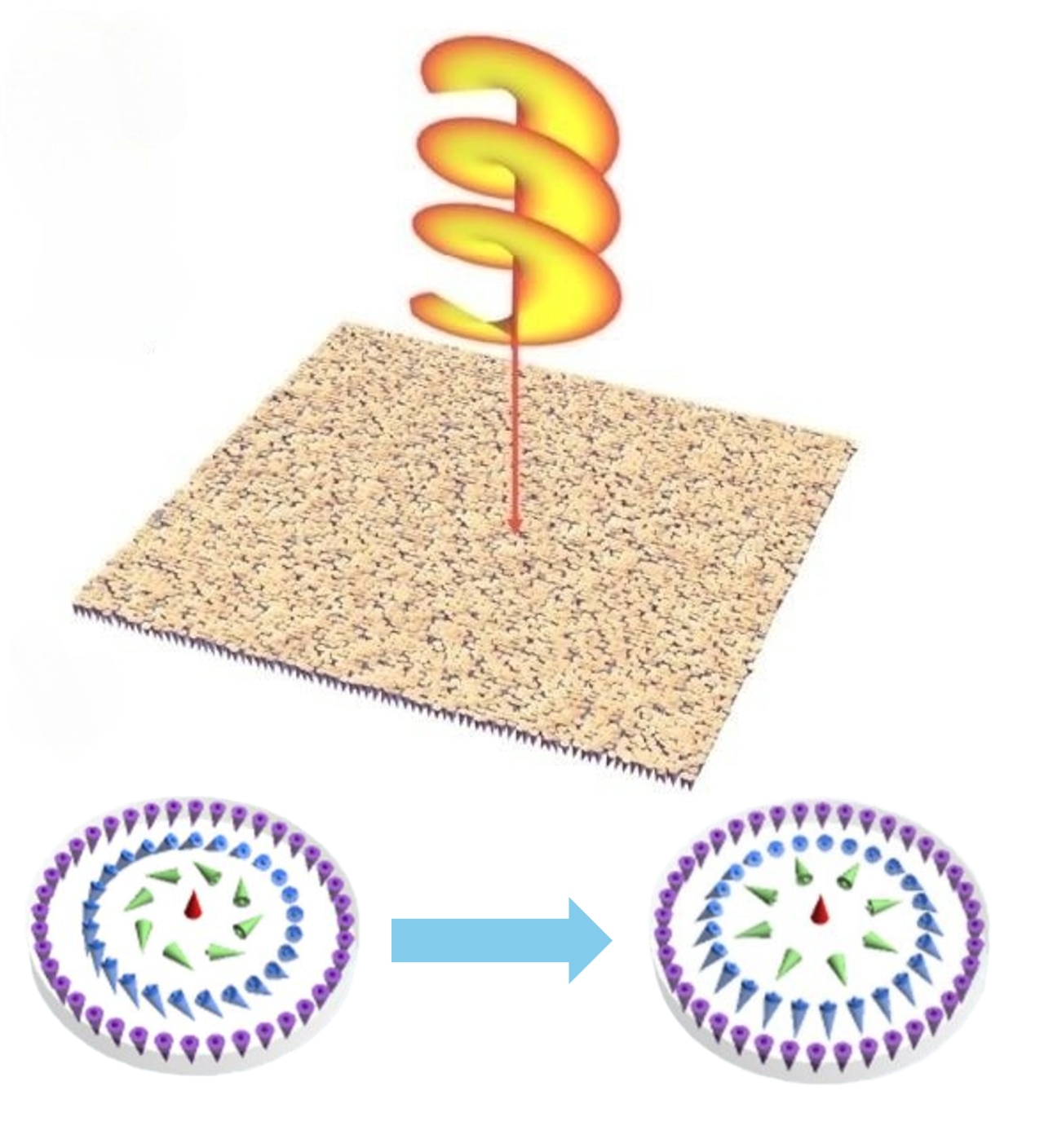
Light can drive collective ionic vibrations to induce electric polarization or magnetization that was absent before illumination. These motions can even create swirling patterns of electric dipoles or magnetic moments, opening new possibilities for next-generation information storage and processing.
Physical Review Letters 131, 196801 (2023)
Physical Review Letters 132, 026902 (2024)
AI-assisted large-scale molecular dynamics
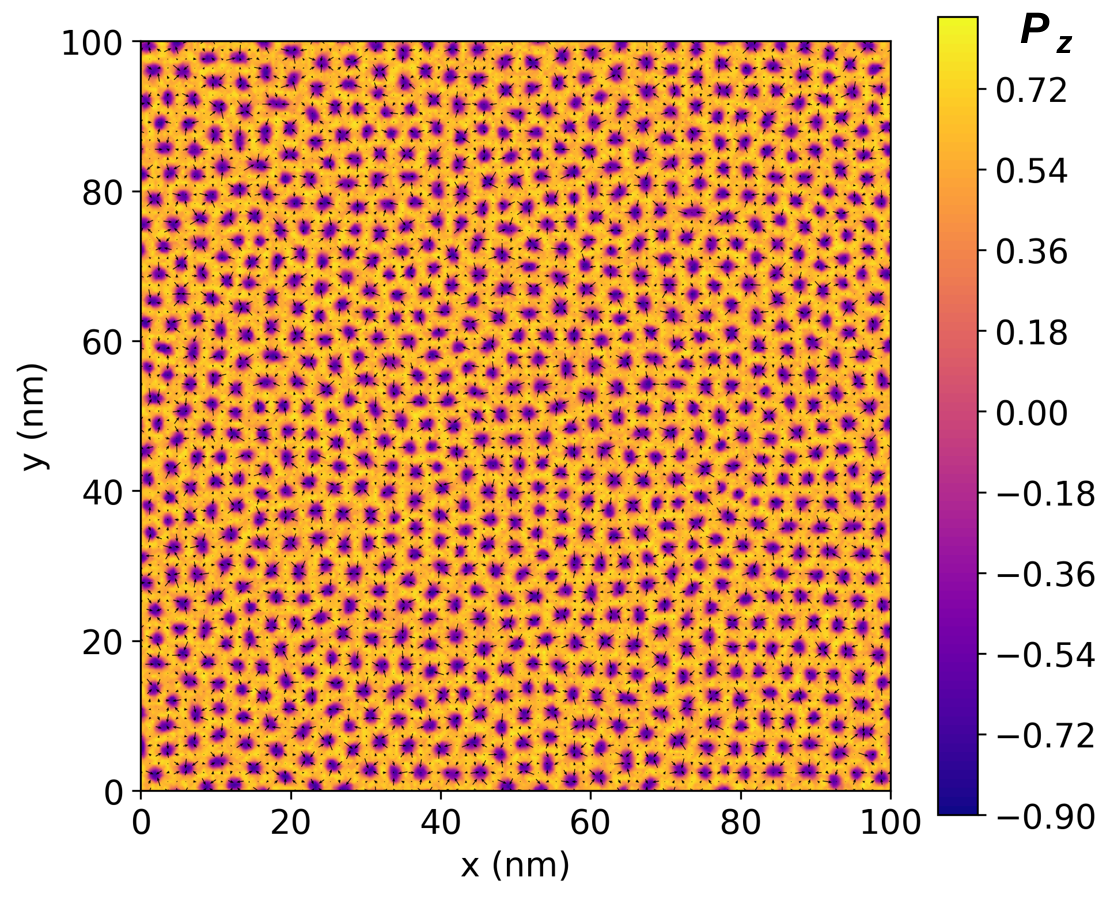
Artificial intelligence (AI) is transforming atomistic simulations, enabling us to model the molecular dynamics of nanosystems containing over a million atoms and spanning more than 100 nanometers. 10⁴ molecular dynamics steps can be completed within minutes, while preserving the accuracy at quantum-mechanical level.